Every parish in Britain carries at least one story it tells about itself. A dragon under a hill. A bell ringing from a drowned village. A black dog on the church path at dusk. Local legends are not tidy tales with a moral bolted on at the end; they are stubborn, half-finished and pinned to real places — the pond, the gate, the stone in the corner of the field. That is exactly what makes them good material for a storyteller. What follows is a region-by-region tour, with the sort of detail you can carry into a performance.
Wessex and the West Country
Wiltshire gives you the moonrakers of Devizes: villagers caught raking a pond for smuggled brandy, who told the excise men they were fishing out the moon's reflection. The officials believed them, and the nickname stuck for the whole county. It is a gift of a tale because the villagers are the clever ones, not the fools the story pretends they are.
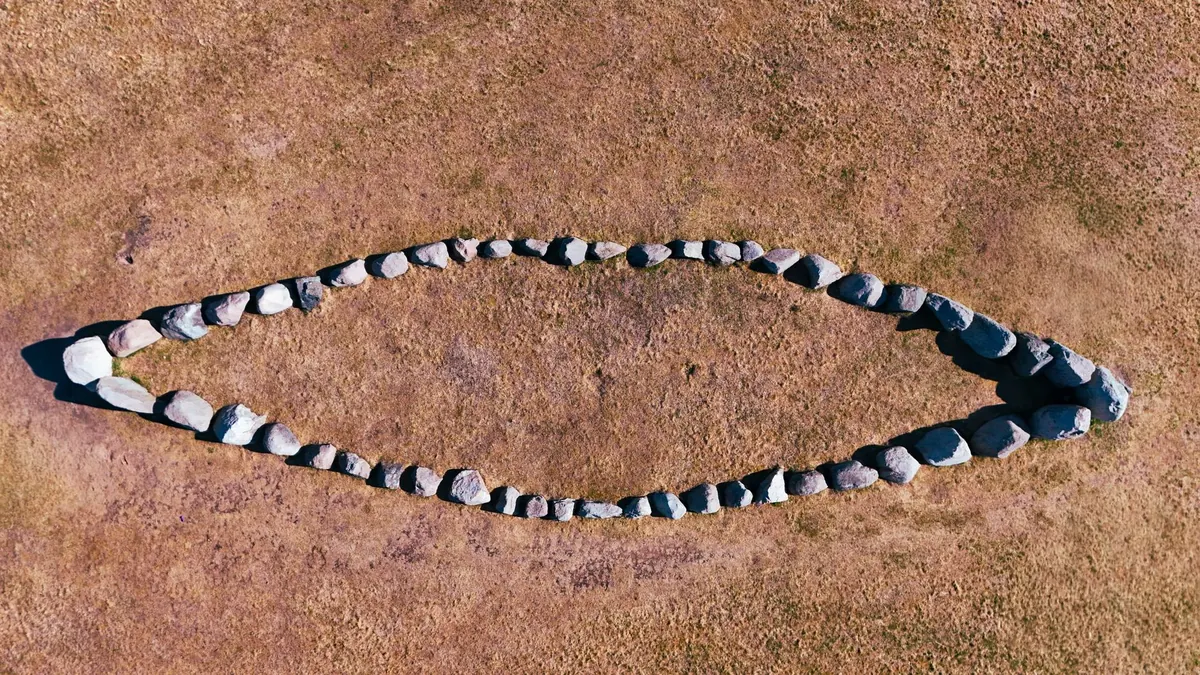
Cornwall is darker. Jan Tregeagle, a magistrate said to have sold his soul for gain, is doomed to drain Dozmary Pool with a limpet shell; elsewhere he must twist a rope from sand at Gwenvor. The men of Bodmin Moor who hurled stones on a Sunday became the Hurlers, three standing circles in a line. At Wayland's Smithy on the Ridgeway, tradition has it that a traveller who leaves a coin and a horse overnight will find the animal freshly shod by morning. Inland Somerset offers the Glastonbury thorn, flowering out of season, and the ruins of the abbey that bear Arthur's grave in the telling.
East Anglia, the Fens and the South East
East Anglia's most durable legend is Black Shuck, the shaggy dog of Bungay and Blythburgh. On a stormy Sunday in 1577, so the church accounts say, it burst into both churches, killed a man, and left scorch marks on the north door at Blythburgh which visitors still point out. You do not need to settle whether it happened; the marks are the story.
The Fens bring you the Lantern Man, a light that drifts over the dykes and marshes. The rule in the telling is simple: never answer it, never follow it, never whistle. Suffolk has the Green Children of Woolpit, brother and sister found at the edge of a field, speaking no known language and refusing all food but beans. Then there is Tom Hickathrift of the Isle of Ely, who made a club from a cart axle and cleared the fens of giants.
Coventry has Lady Godiva — and worth noting for tellers: Peeping Tom is a much later addition, tacked on centuries afterwards. London has Dick Whittington and his cat, Spring-heeled Jack, and a whole cellar of stories about buried Roman legions that always turn out not to be there.
The North of England
The north is thick with dragons and boggarts. In County Durham, the young heir John Lambton hooks a worm from the River Wear and throws it down a well. It grows monstrous in his absence, eats cattle and children, and he ends it in spiked armour at Lambton Castle — while a witch's curse promises that no Lambton will die in his bed for nine generations. Northumberland has the Laidly Worm of Spindlestone Heugh: a princess turned into a dragon by a jealous stepmother and restored by her brother's kiss, if he can find the courage to give it.
Add to these the Hedley Kow, a shapeshifter that turns a woman's luck inside out; the Cauld Lad of Hylton Castle, who clatters around until someone leaves him clothes and he vanishes, singing; Peg Powler in the Tees, who is best left unmentioned near the bank; and the barguest, the eye-burning black dog that haunts the lanes at night. Yorkshire contributes the Dragon of Wantley, killed not by a hero in shining armour but by a cunning man in spiked armour.
Scotland
Borders and Lowlands
Thomas the Rhymer of Earlston met the Queen of Elfland under the Eildon Tree, served her for seven years, and came home unable to lie. In the Borders you also meet the Bean-nighe, the washer at the ford, scrubbing bloody clothes that belong to someone not yet dead. Seeing her is bad manners; catching her is worse.
Highlands, Islands and Coast
If your audience likes a clean horror, the kelpie is the reliable one: a horse standing at the water's edge that lets riders mount and then takes them under. Its freshwater cousin, the each-uisge, is crueller still. The fairy flag of Dunvegan links a square of old cloth to the fortunes of the MacLeods. And on Orkney, Shetland and the northern coasts, seal skins are taken off by women who walk the shore as people, and every selkie story ends with a hidden skin and an unkept promise.
Wales
Cantre'r Gwaelod, the drowned lowland under Cardigan Bay, was lost when the gatekeeper Seithenyn drank too much and forgot the floodgate. Listeners who have seen the sea off Aberdyfi find the ringing bells easy to imagine. At Llyn y Fan Fach a young man married a woman from the lake, on condition he never strike her three times; their sons became the Physicians of Myddfai, and Welsh tradition gives you a whole family of healers out of a broken promise.
Other stalwarts: the afanc, a lake beast dragged out with oxen and chains; Twm Siôn Cati of Tregaron, the trickster who outwits cruel gentry; Rhiannon and her three birds in the Mabinogion; and Gelert at Beddgelert — the faithful hound that a lord kills, wrongly, over a bloodied cradle. Do note the twist for tellers: the Gelert story appears in Indian and European collections too, so it makes rather a good example of legends travelling.
Northern Ireland and the Islands
The Children of Lir live as swans for nine hundred years, and their singing is the saddest sound in Irish tradition. Finn MacCool builds the Giant's Causeway to meet a Scottish rival, and Lough Neagh is said to be the hole left when a giant scooped up the soil that became the Isle of Man. The banshee attaches to particular families, the pooka turns up as a black horse with bad intentions, and the dullahan collects the names of the dying at speed.
On the Isle of Man, the Moddey Dhoo pads through Peel Castle, and the buggane at St Trinian's pulls the roof off the church whenever it is finished — until a tailor, sewing alone at night, gets the better of it. Orkney and Shetland offer the trows, small night-going folk who take badly to daylight, and the Finfolk who come in from the sea.
Turning a Legend into a Story
Choose two or three details and hold them tight. A teller who tries to include every variant will lose the room. This sequence works well:
- Name the place exactly. "The pond behind the pub" lands better than "a village somewhere".
- Pick one version and credit it. If you mix three tellings, say so.
- Find the turn. Every legend has a moment where the ordinary stops working.
- Cut the history. Keep enough to set the scene, no more.
- Include the impossible detail. Scorch marks on a door; a limpet shell; a bell under the water.
- End near the place, not on a moral. A final sentence that points back at the landmark works better than a lesson.
Example of an opening rhythm: "There is a pool under the moor, and men say there is a man in it still, making a rope out of sand."
Finding and Telling Them Fairly
Start local. County record offices, church guidebooks, place-name dictionaries and the folklore collections in your nearest library are fuller than the internet and more peculiar. Standard printed sources are Katherine Briggs's A Dictionary of British Folk-Tales in the English Language and The Lore of the Land by Jennifer Westwood and Jacqueline Simpson.
Two courtesies matter. First, some legends sit alongside real graves, recent deaths or living families, and a flippant telling will be heard as disrespect. Second, know whether you are telling or inventing, and say which. If a story has a known teller or printed source, name it. If you have made the ending up, call it your own version.
Then go outside. Stand at the pond, the stone circle or the church door and tell it there. Local legends are built to be told in earshot of the thing they describe, and the place will do half the work for you.
Photo: Efrem Efre / Pexels